
Machine-translated from Faroese and not yet reviewed. Read the original.
It turned into a long day at Atleticum today. We left the hotel at 10:30 and were not back until 22:30. By then all seven of our participants had competed in their events.
Our first race got things going with an age-group record for boys 17, which is also a Hvirlan club record. It came from the high and long jumper Trygvi Laksafoss, who competed in the 60 metres. His time was 7.86 seconds, which was not quite enough to reach the top half. On Sunday Trygvi competes in his favourite event, the long jump. He will also try to shave another bit off the good time he ran in the 200 metres last weekend in Reykjavík.
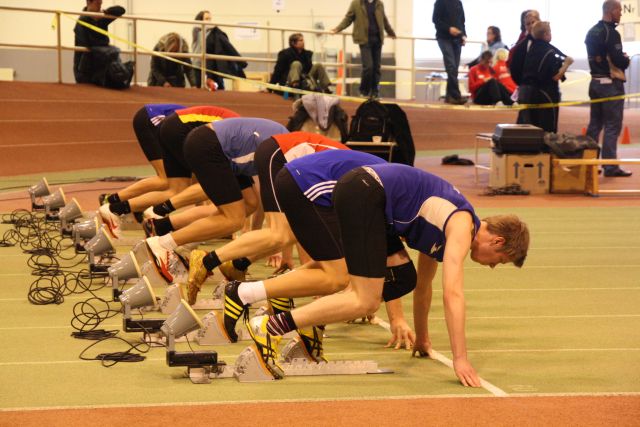
Trygvi nearest the camera, ready for the 60m
We had two participants in the 1,500 metres for boys 17. 15-year-old Regin Joensen ran first, in the B heat. His goal was to improve his personal best, which was 4:35. The field stayed together for a long time, and Regin kept up well. The pace suited Regin’s plans very well, so there was only one thing to do, and that was to follow. And that is what Regin did, until the pace dropped slightly after 1,000 metres. Then Regin said goodbye and thank you, and ran away from everyone to finish alone with a new personal best, which is now 4:31.96. On Sunday Regin runs the 200 metres with the boys 16.
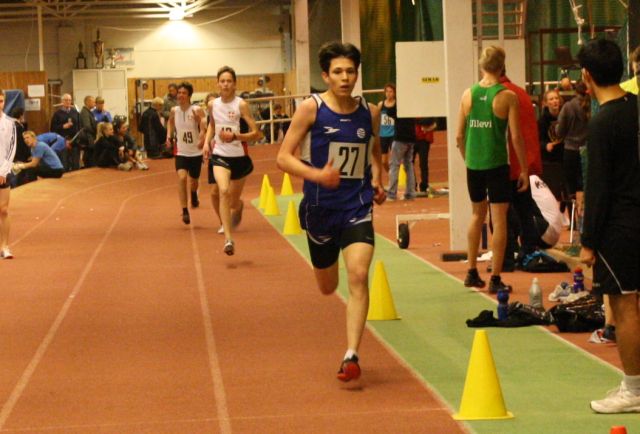
Regin won his heat clearly with a new personal best of 4:31.96
In the A heat was Marnar Djurhuus, who has just turned 16. Marnar has trained well this winter, and the goal was a place on the podium. The entry times also suggested there was a chance of a medal here, perhaps even a win. But Marnar also plans to qualify for the Island Games this summer. The A standard is 4:09, and Marnar intended not to be too far from that time. At first the pace was as it should be. However, Marnar seemed somewhat boxed in in the big heat for the first 2-3 laps. But suddenly he gathered himself, and with a tremendous effort he moved into the lead. He held the lead until there were 200 metres left. Then a Swede went past him again. Marnar tried to chase all the way to the line, but too much energy had been used. The silver, however, was well and truly secured, and our first medal was in the bag. On top of that, this is a Faroese age-group record for boys 16. On Sunday Marnar runs the 800 metres with the men.
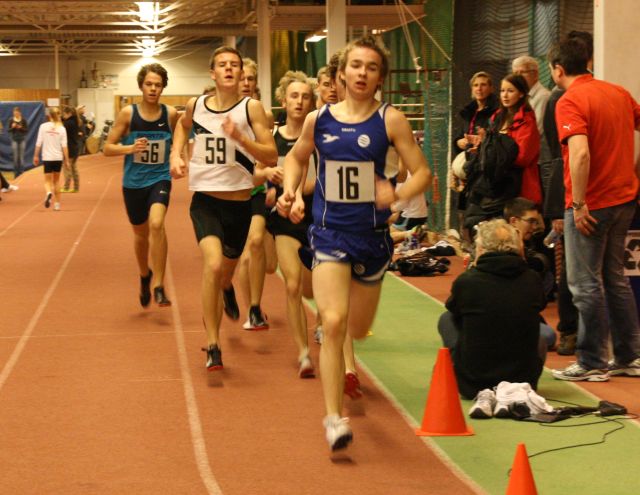
Marnar was in front with 300m to go, but finished 2nd in 4:16.74.
Rebekka Fuglø’s training has also gone much better this year than in previous years. She has got rid of the injuries she has chronically struggled with, and at the same time she has started training 7 days a week. There was therefore great excitement about whether this work would pay off. 17-year-old Rebekka won many medals and set several Faroese records over distances from 200 to 1500 metres between the ages of 12 and 15. The reality is that since 2007/08 her results have not improved much, nor have the many medals been won when she has travelled abroad.
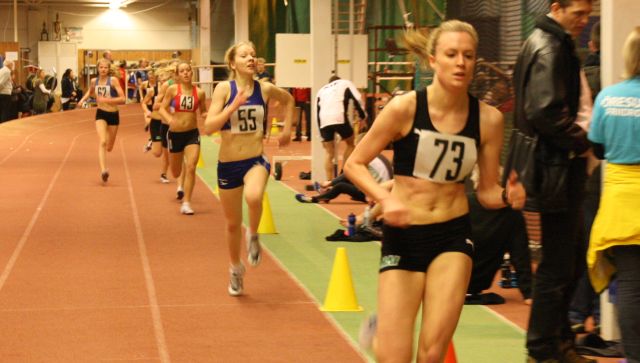
Here Rebekka has launched her finishing sprint, 100m to go and closing fast on the leading woman
She set her personal best in the 1,500 metres at the Reykjavík International Games in 2009, when she ran 5:05. The A standard for the Island Games is 5:03, so Rebekka’s goal was firstly to set a personal best, secondly to achieve the Island Games standard, and then to get under 5 minutes. The race was for girls 19, which is almost always a small group. There are therefore often good chances of medals, so that was also a goal.
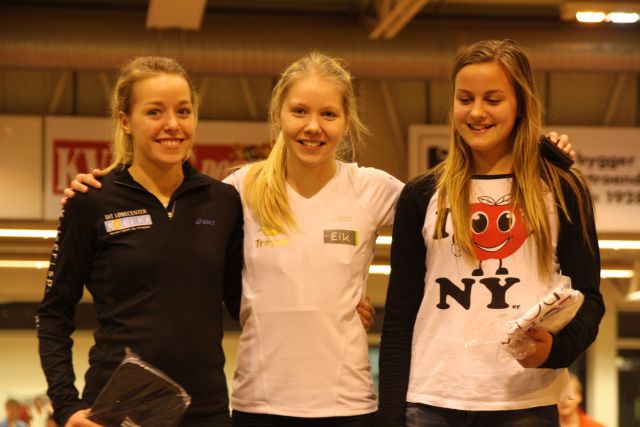
Karina Klok from Denmark, Rebekka Fuglø from the Faroe Islands and Caroline Hjalmarsson from Sweden
In Rebekka’s race too, the pace of the field turned out to suit her pre-planned strategy very well. Because there are only 4 in the girls 19 group, they run at the same time as the women. Lap after lap she lay in 7th place at a pace that indicated she would finish just under 5 minutes. After 1,000 metres the field has spread out a little, while one woman has run herself well into the lead. With one and a half laps – 300 m – left to run, Rebekka makes a tremendous surge. She sweeps past all her nearest rivals and moves into second place. And then she starts chasing the leader. With a hundred metres left she really starts to close the gap, and with some 40-50 metres to go she comes, in the best Bjørk style, almost right up alongside the leader. But in a very exciting sprint, the other found some extra strength and finished first. Rebekka, however, won the gold medal for girls 19. And that was not all. At the same time she took a full 15 seconds off her own record! Her time was as good as 4:50.34, so it is no wonder she has been beaming like the sun all day. So it will be exciting to watch when she runs the 800 metres against the women tomorrow.
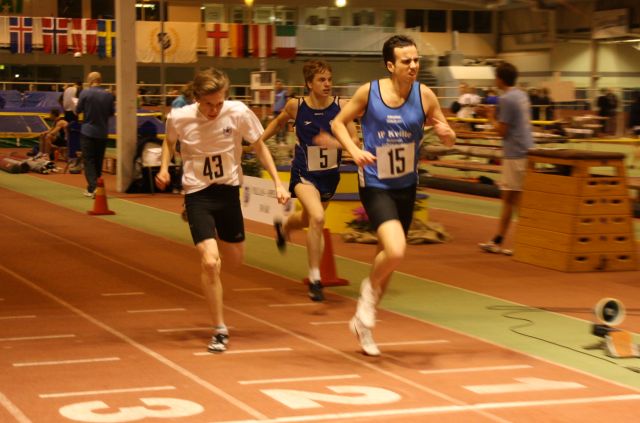
Hans (5) crosses the finish line in third place in his heat
One athlete who always leads the way in training is Hans Jacobsen from Bragdið. Today he was to try the 400 m in the boys 17 group. Hans was unlucky last winter when he broke his leg. This meant he lost the chance to reach good form last summer. But this winter Hans has again trained a lot and trained well, and today he was really fired up. Today was to be the day! At breakneck speed he tore round the first lap, which took him no more than 25-26 seconds. But that was of course far too fast, and the price had to be paid. The last 150 metres were like a basic course in survival. With a lot of lactic acid in his muscles, he fought for every metre. And although Hans was not satisfied with the final result, it was still an improvement on his own record by 22/100 of a second. It can be said to be very positive to set a personal best when you come home in 30 seconds. Because then there is really a lot to gain in a race run at a more even pace! So it can be expected that the 55.71 seconds Hans ran today will soon become under 54 seconds. Tomorrow Hans can set another personal best when he runs the 200 metres.
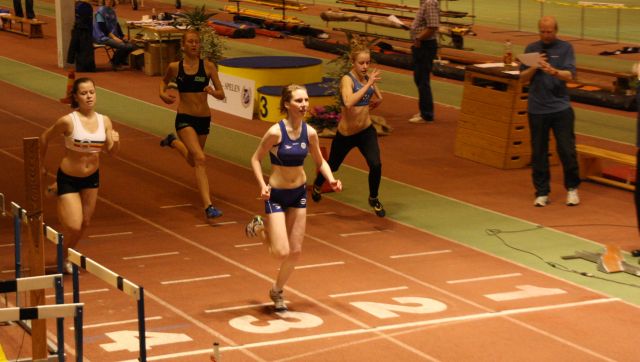
Elsa ran well and won her heat in 29.25 seconds
Elsa Berg and Sára Debesardóttir were the last to run today. Elsa was to run at 20:30 and Sára at 21:30. By then they had been waiting in the hall since 11:00 to run the 200 metres. Whether it was this long wait that meant they were the only ones not to set personal bests can only be guessed at, but it is not unlikely. Elsa ran with the girls 16 and won her heat in great style. And the time was also quite good. 29.25 seconds is Elsa’s second-best time ever, and she is now only 45/100 of a second from the Island Games standard. Tomorrow Elsa will run against Rebekka and the other women in the 800 metres.
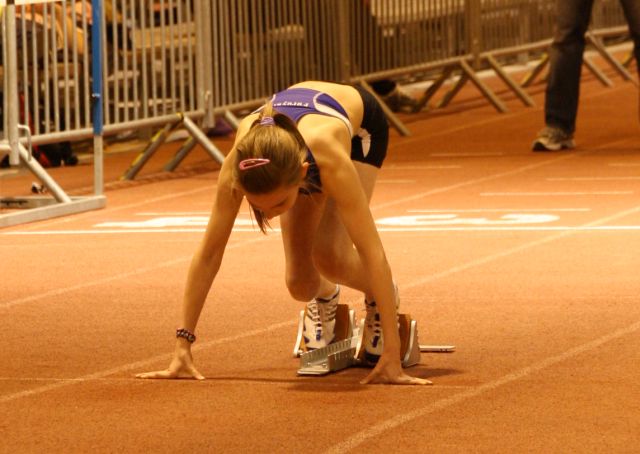
Sára has just started her 200m, which she ran in 30.87 seconds
Sára ran the 200 metres against girls 14. The hope was that she could improve her best time, which was 30.7 seconds. But that did not quite happen. Sára was in a strong heat, where big, strong and well-developed 14-year-old girls pulled away from the 12-year-old girl, who nonetheless responded well. The result was 30.87, which is her second-best time. There is little doubt, however, that it will not be long before that leading 3 is replaced by a 2. Tomorrow Sára runs the 60 metres with the girls 13.
Gold, silver, 2 age-group records and 5 personal bests on the first day give great encouragement for the second day! At the time of writing they are all asleep, building up strength for the challenges ahead.
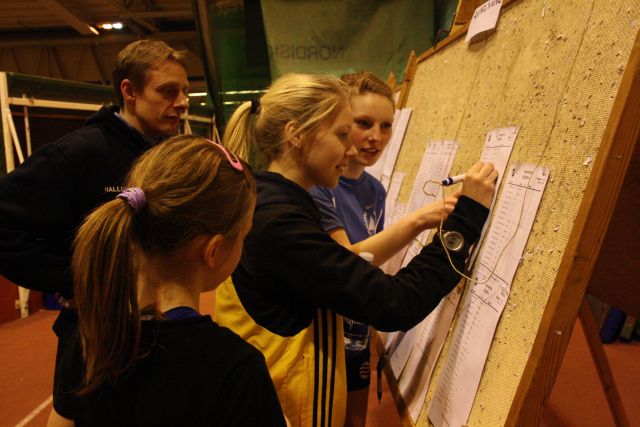
“Avprickning” (check-in) in the Atleticum hall where the competitions take place
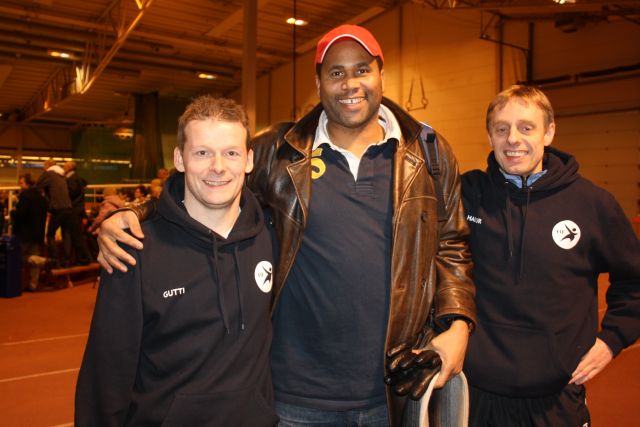
Gutti and Hallur got to say hello to Jeremy Price, who was in the Faroe Islands in 2006 and ran a coaching course
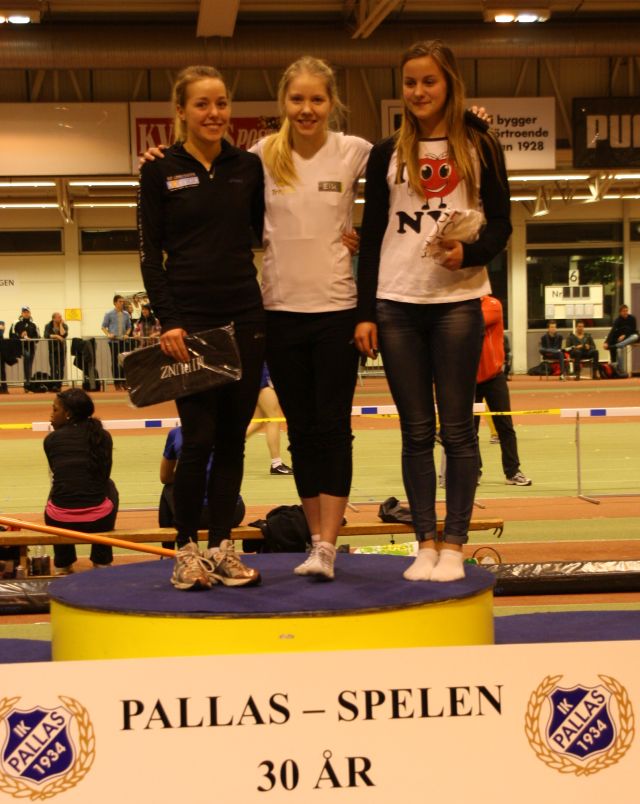
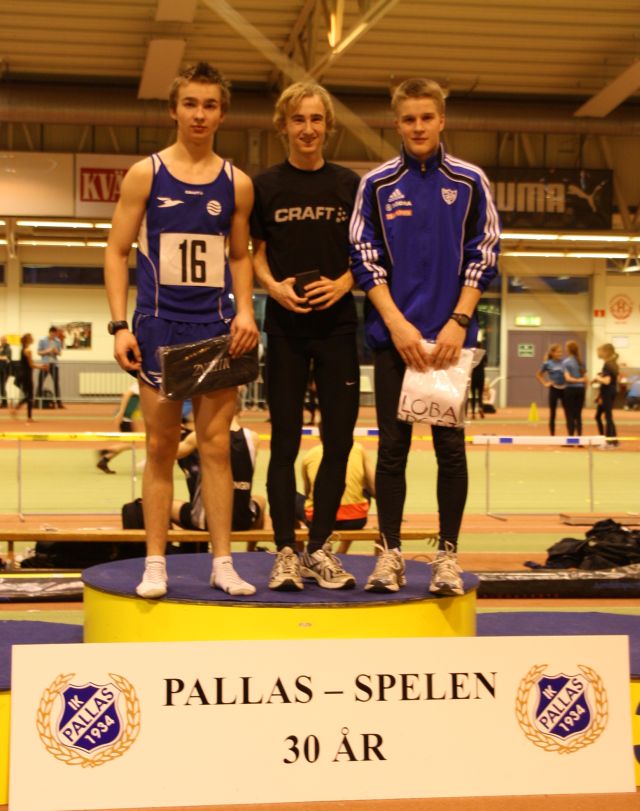
Rebekka and Marnar made it onto the podium today





You must be logged in to post a comment.