
Machine-translated from Faroese and not yet reviewed. Read the original.
The strong runners Rebekka Fuglø and Rúni Seloy were nowhere to be seen when the first round of the TF Winter Series, Runt Agnið, was run. And it was not because of injury or lack of motivation. On Sunday, Dansk Atletikforbund organised a varied and exciting running seminar in Odense, offering both talks and training sessions of various kinds.
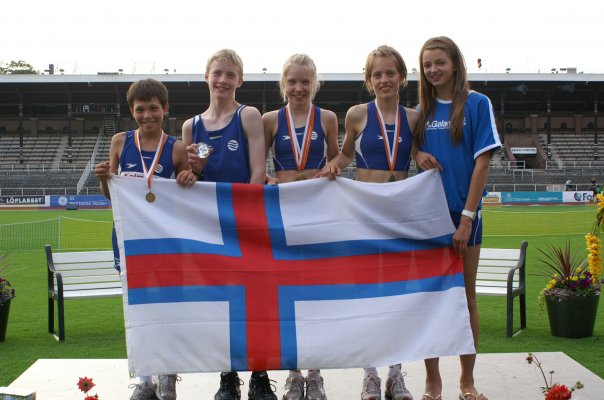
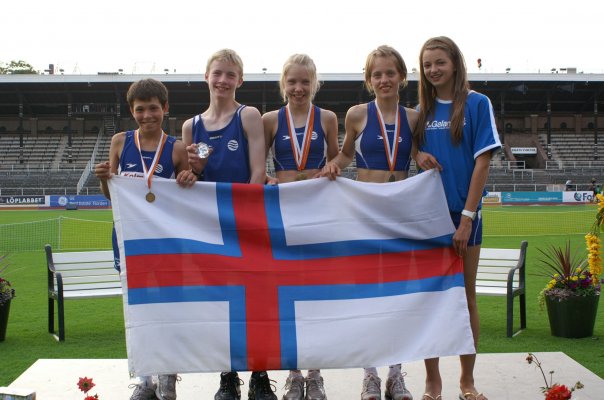
Rúni and Rebekka have been regulars on the youth, senior and Island Games national teams since 2004. Pictured here at the Olympic Stadium in Stockholm in 2008 together with Regin Joensen, Bjørk Herup Olsen and Vár Gregersen.
Earlier this autumn, FÍF decided that we would invite some of our middle- and/or long-distance runners to this seminar. The choice fell on Rúni and Rebekka, who are both young runners with a bright future. Both have also been active as coaches in their clubs, so they can pass the new inspiration on to the clubs here at home in the Faroe Islands.
We hand over to Rebekka and Rúni:
Løberseminar 2015 has just come to an end, and in our view it was a very successful event. This running seminar, intended as inspiration for running enthusiasts and which this year drew around 200 people, took place at the University in Odense and at the unusual and creative stadium outside the university.
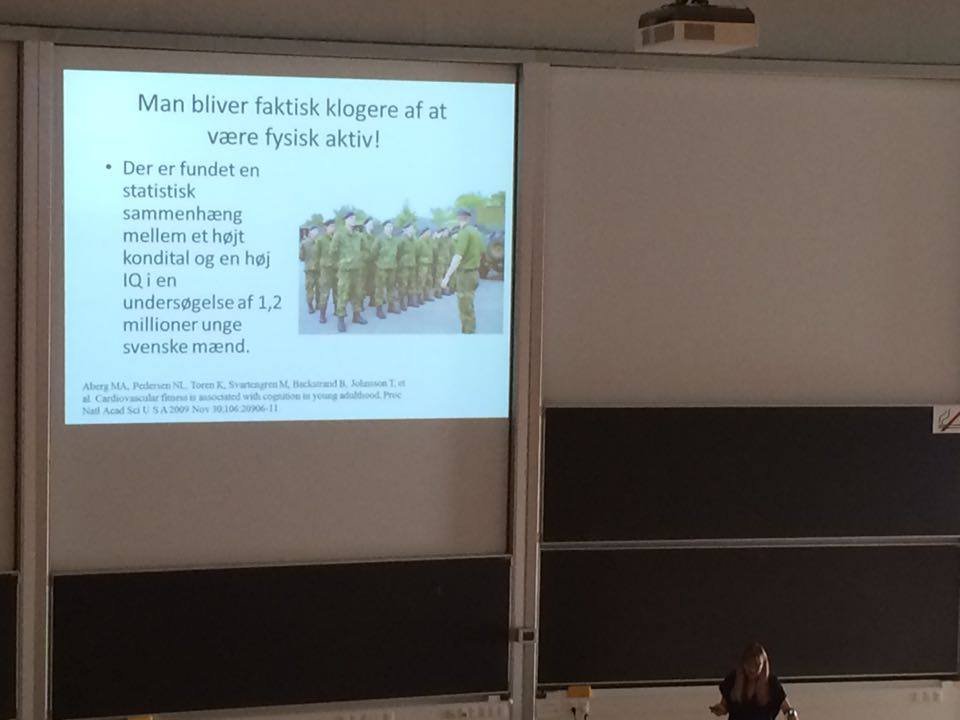
The seminar began with a welcome and a joint talk titled “Løb dig sund og glad“. The talk was given by Bente Klarlund, who is a qualified doctor and teaches at the University of Copenhagen. Her research is in health, and she showed, in a very engaging way, how important physical exercise is for health.
After this there were four different sessions to choose from, two of them talks and two running sessions. Before we arrived, Rúni and I had each signed up for a different session, the talk “Skadeforebyggelse og alternativ træning” and the training session “Inspiration til løbelege og alternativ træning” respectively. In the talk “Skadeforebyggelse og alternativ træning” physiotherapist Christian Neergaard explained where and how injuries occur in runners. Neergaard gave advice on what to do if you start to feel pain. He also showed how alternative training can be used; for example, studies have shown that aqua jogging for a period of 4-6 weeks can maintain the gains from endurance training just as well as running.
The training session “Inspiration til løbelege og alternativ træning” featured various training games covering coordination, running and strength training. The aim was to train through play – a good contribution to group training with both children and adults.
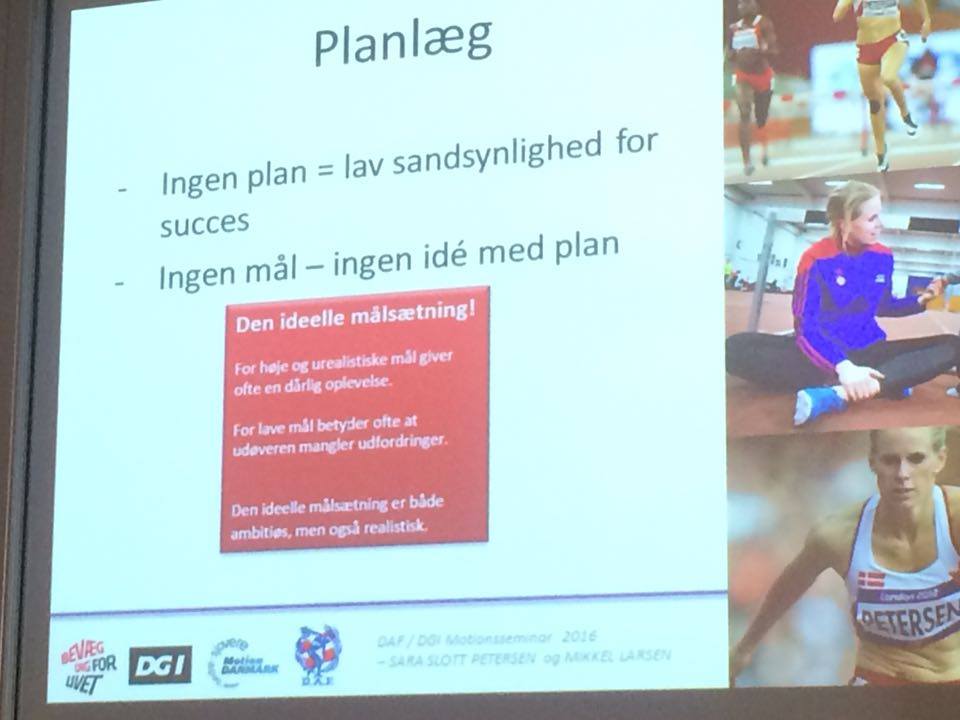
Words are unnecessary – planning isn’t just half the work. It’s everything.
After the lunch break came what I had been looking forward to most of all, namely a joint talk by world-class runner Sara Slott Petersen and her coach Mikkel Larsen. The talk was titled “Vejen til VM finalen”, and together they gave an exciting presentation in which Sara described her development towards the world elite, the coach talked about his role as coach, then Sara spoke about motivation at world-elite level, and finally the coach talked about making a long-term plan and setting goals.
The coach showed what a big task and challenge it is to take responsibility for a talent like Sara. He has sought inspiration from many different people in many different places. He highlighted how important it is to set goals and make a plan, but also pointed out that it is no less important to dare to deviate from the plan and adapt training to the athlete’s form on the day:
“A good rule of thumb is that even the best plan must never be too ‘locked’. A coach’s foremost task is first to plan everything as precisely as possible, and then to be so present and have such a good feel for things that you can constantly adapt and adjust according to form on the day, motivation, external circumstances etc.”
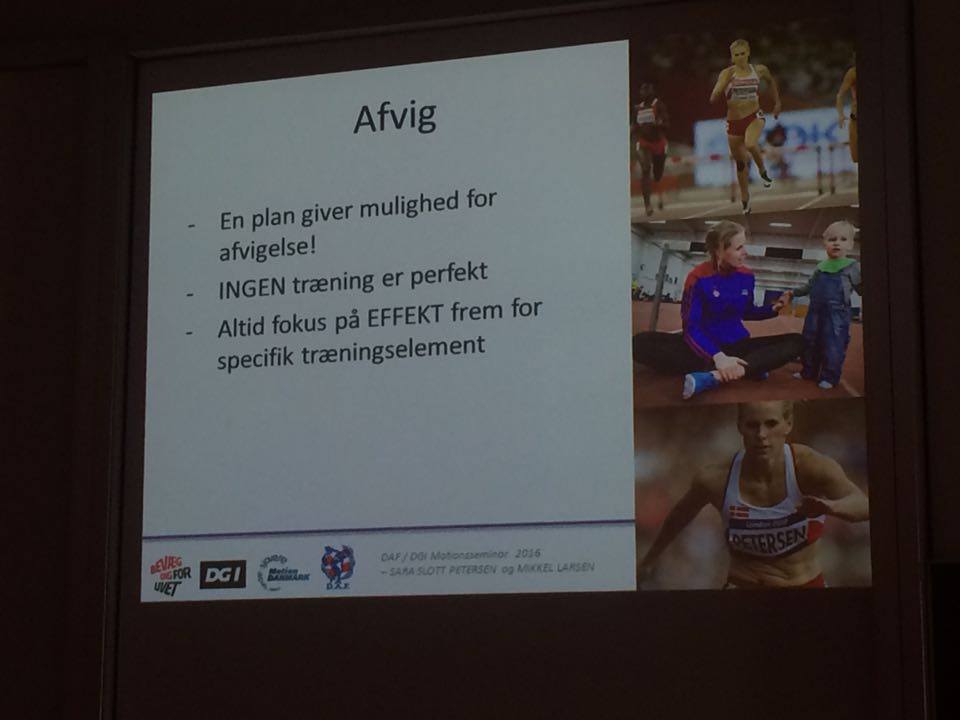
“Don’t be a slave to your training plan” was among the many good tips
Sara Slott pointed out, among other things, that no two paths or approaches are exactly the same. Each individual has their own background and story on the way to the world elite. From a young age Sara showed great talent in the 400 m hurdles, and others had high expectations of her. In the talk she highlighted that it can be hard, at 15 years old, to be told that it will be in about another 15 years that the big things are most likely to happen, namely that you will peak. She also pointed out that when your development is going in the right direction, but not as much as you had hoped and set as your goal, it can be hard to trust that the plan will work. Although her plans and goals have not always held, and she has been badly hampered by injury, Sara, at 28, has this year made a real breakthrough at world-elite level. Among other things, she has set a Nordic record in the 400 m hurdles with a time of 53.99 seconds, and in the World Championships final in Beijing in August she finished in an impressive 4th place. Her next goal is the Olympics in Rio in 2016.
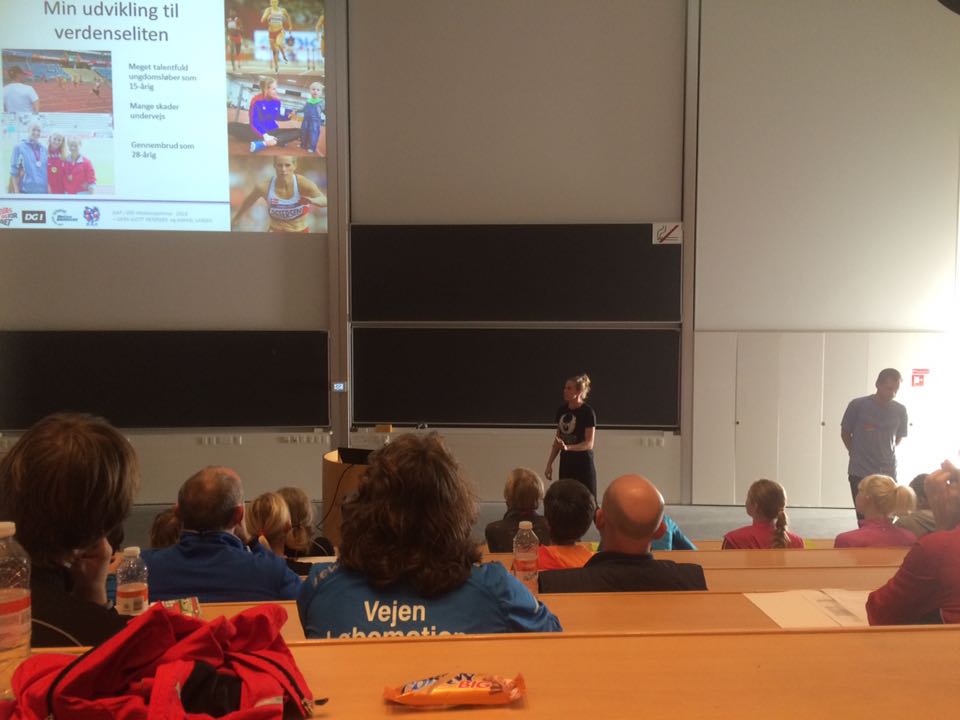
In an interesting talk, Sara Slott Petersen described her path to the top
When the joint talk was over, there were five different sessions to choose from. Neither Rúni nor I got our first choices. Rúni wanted to attend the training session “Funktionell styrke for løbere” and I wanted to attend a training session with Sara Slott and Mikkel Larsen, but unfortunately these were fully booked, so we each had to go to a different talk. The wish to get into the training session with Sara Slott and her coach kept bubbling inside me, so I asked one of the helpers whether it might be possible. It turned out that someone who had signed up for exactly that session had not turned up, so I was allowed to go in their place. That got my adrenaline pumping and I was as excited as a small child. The session was rewarding and a good inspiration for my own training, because although the focus was on hurdling and the coordination that goes with it, the exercises are also good and strengthening for runners in other events.
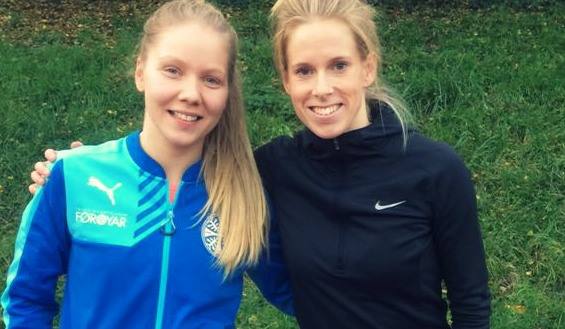
Rebekka got to train with Danish world star Sara Slott Petersen
The last talk of the day was given by Niels Ørtenblad. His research is in muscle physiology and biomechanics. The talk was titled “Hvorfor bliver jeg træt, når jeg løber?”, and Ørtenblad explained the physiological reasons why we feel tired when we run. Ørtenblad gave a great deal of good advice on training, diet, energy intake during running and more.
All in all, this was a successful seminar, and it was fun to get to try out the interesting athletics stadium in Odense.
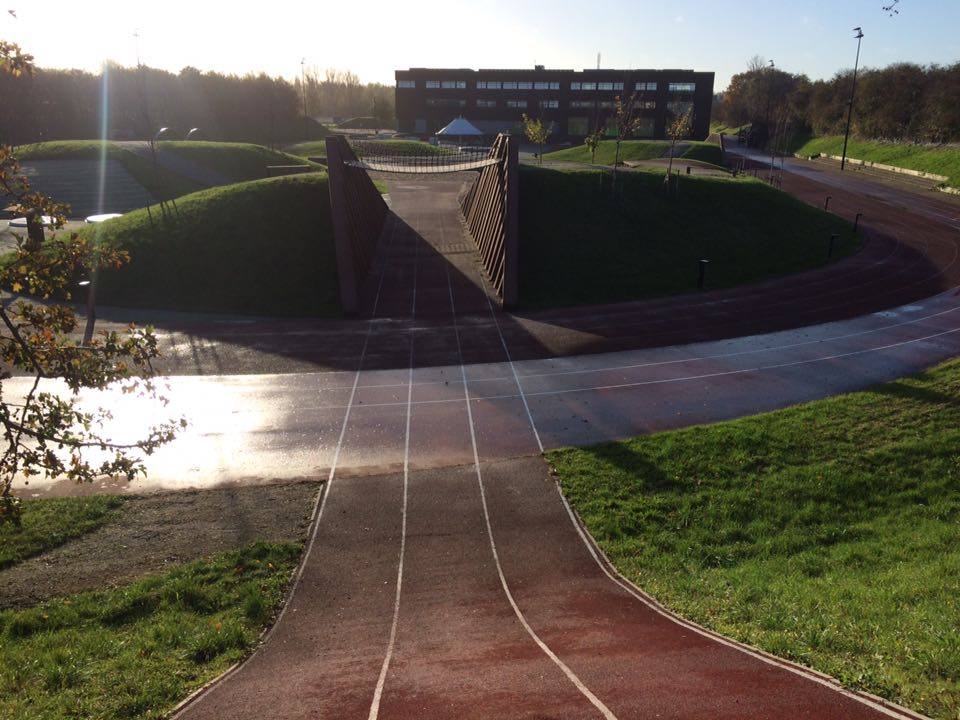
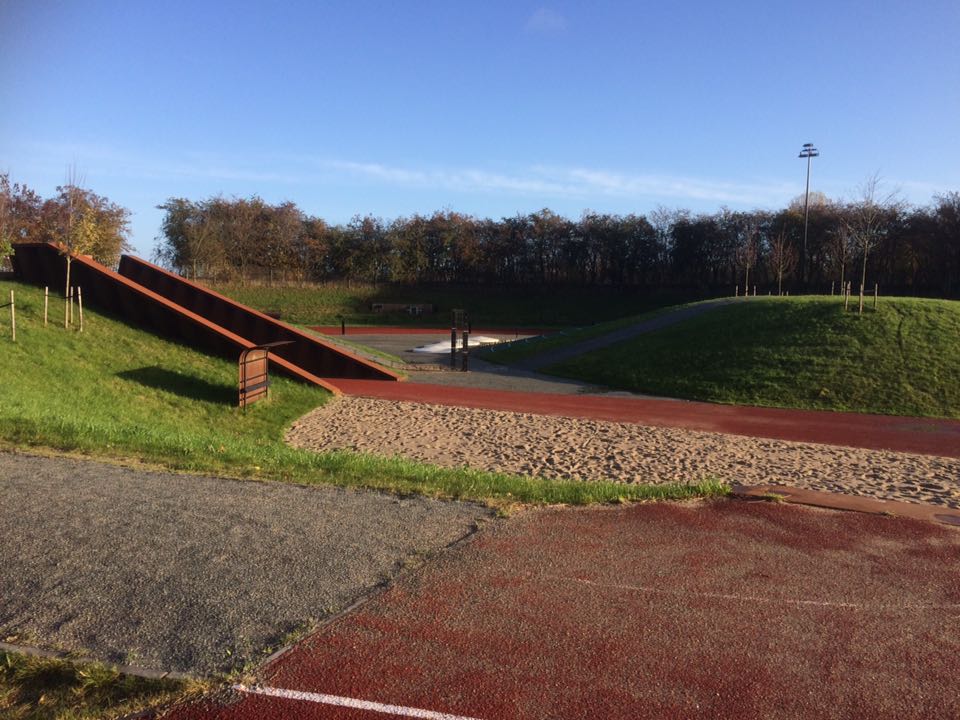
Since the track at Odense Atletikstadion was modernised, the University track has been completely transformed. It now makes all kinds of exciting training possible.
Photos


You must be logged in to post a comment.